“Eolbaksa” is as distinctive as its name suggests. A portmanteau of the Korean words for ice (eol-eum), energy drink Bacchus, and the clear carbonated beverage popular in South Korea, Chilsung CIDER, Eolbaksa is a homemade energy blend that has long been a staple in jjimjilbang (public saunas). Although spelled “CIDER” in English, the drink is pronounced “Sa-i-da” in Korean, which explains the “Sa” at the end of “Eolbaksa.” Its exact origin remains unclear, but it is widely believed to have emerged as a post-sauna pick-me-up—an improvised recovery drink to restore energy after heavy sweating. It now features on bathhouse menus nationwide under names like “Eolbaksa” or simply “Baksa.”
Over time, the drink migrated from steamy saunas to the fluorescent-lit halls of gaming cafés. Gamers began mixing their own versions after word spread that it “worked as well as any commercial energy drink,” helping them push through all-night gaming marathons.
The rising popularity of Eolbaksa points to a deeper cultural trend—one driven by unrelenting fatigue and the constant demand for performance. Eolbaksa is just one of several improvised blends now circulating among the chronically tired. A well-known variant, “Bakgalbae,” combines energy drink Bacchus with crushed pear juice—sold under the Korean name Galamandeun Bae. A splash of the isotonic sports drink Powerade turns it into “Power Bakgalbae,” a name that suggests a high-voltage jolt. The standard formula is an even 1:1:1 ratio. Another common mix is “Eolpobi,” made with ice, the electrolyte drink Pocari Sweat, and energy drink Vita 500.
Over time, the drink migrated from steamy saunas to the fluorescent-lit halls of gaming cafés. Gamers began mixing their own versions after word spread that it “worked as well as any commercial energy drink,” helping them push through all-night gaming marathons.
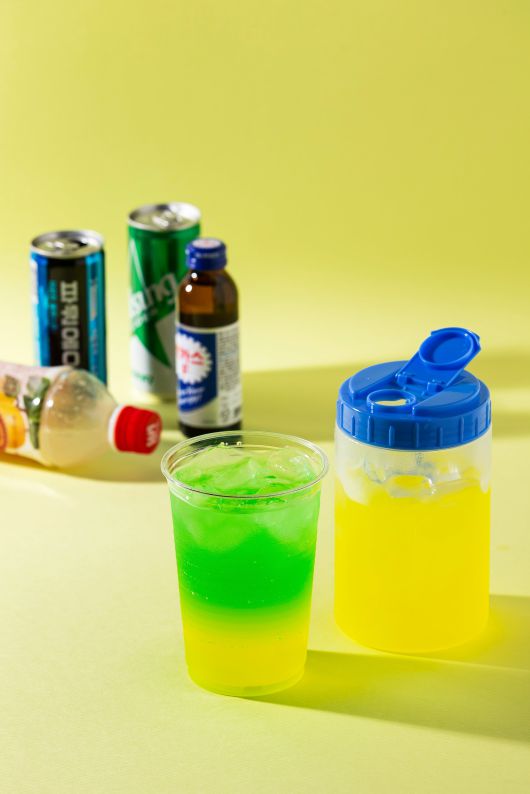 |
On the far right is “Eolbaksa,” a popular ice-cold water bottle often seen in jjimjilbangs (Korean saunas). The drink in the middle cup is a mix of Bacchus, crushed pear juice, and Powerade—nicknamed “Power-Bak-Gal-Bae.” /Yang Soo-yeol |
The rising popularity of Eolbaksa points to a deeper cultural trend—one driven by unrelenting fatigue and the constant demand for performance. Eolbaksa is just one of several improvised blends now circulating among the chronically tired. A well-known variant, “Bakgalbae,” combines energy drink Bacchus with crushed pear juice—sold under the Korean name Galamandeun Bae. A splash of the isotonic sports drink Powerade turns it into “Power Bakgalbae,” a name that suggests a high-voltage jolt. The standard formula is an even 1:1:1 ratio. Another common mix is “Eolpobi,” made with ice, the electrolyte drink Pocari Sweat, and energy drink Vita 500.
These drinks typically combine caffeine, electrolytes, and vitamins—ingredients associated with mental alertness and physical recovery. In the early 2000s, when commercial energy drinks were still relatively scarce in South Korea, students preparing for college entrance exams began creating their own blends. These “boong-boong drinks”—a slang term for DIY power mixes—reflected a simple logic: if coffee wasn’t enough, why not mix caffeine-heavy beverages with vitamin boosters or powdered supplements for something more functional?
What these concoctions offer is a quick reprieve from fatigue and a short-lived mental lift. YouTube videos with titles like “Pharmacist’s Secret Anti-Fatigue Drink” or “The Fatigue-Buster a Nutrition Professor Swears By” routinely go viral, attracting millions of views. Comment sections fill with questions like, “Is this safe for high school students?” and “Are there side effects?” Testimonials frequently claim the drink provides enough of a boost to power through late-night study sessions or leave users feeling refreshed after a brief nap.
Medical experts, however, are urging caution. Kang Jae-heon, a professor of family medicine at Kangbuk Samsung Hospital, warned that effects can vary depending on what is mixed, how much is consumed, and individual health conditions. “It’s risky to assume a drink is safe just because someone says it works,” he said. “Repeated use could lead to excessive sugar or caffeine intake.” He also noted that electrolyte drinks—formulated for athletes—can place unnecessary stress on the body if consumed without accompanying physical activity.
Sim Kyung-won, a professor of family medicine at Ewha Womans University Mokdong Hospital, expressed similar concerns. “Consuming caffeine and vitamins on an empty stomach can irritate the digestive system,” she said, adding that such combinations may also trigger heart palpitations or insomnia.
Why, then, are these fatigue-fighting drinks gaining traction primarily among young people? According to Koo Jeong-woo, a sociology professor at Sungkyunkwan University, the trend reflects the chronic burnout experienced by South Korea’s youth. “Today’s young people are raised in constant competition—beginning with English-language preschools,” he said.
In a single cup of this homemade stimulant lies a portrait of a generation running on empty—desperate to stay awake, and stay ahead.
[Cho Yoo-mi]
- Copyrights ⓒ 조선일보 & chosun.com, 무단 전재 및 재배포 금지 -
 이 기사의 카테고리는 언론사의 분류를 따릅니다.