SEOUL, April 24 (AJP) - An engaging exhibition at the Amorepacific Museum of Art offers a sweeping view of Joseon-era "minhwa," the vibrant and often whimsical folk paintings that flourished from the late 18th through the early 20th centuries.
Drawing from 19 institutional and private collections, the show features over 100 works that underscore the distinctiveness of Korean traditional art, a realm where creativity often defied rigid artistic conventions.
Among the highlights is the "chaekgado," or bookshelf painting, a genre that initially graced the royal court in the late 1700s, depicting meticulously rendered shelves filled with books, scholarly implements, and treasured antiques.
By the 19th century, this style permeated popular culture, evolving into a beloved form of minhwa, or folk painting. A striking "Chaekgeori" 12-panel folding screen from 1918 showcases this transition, its vivid pink palette punctuated by unexpected Western elements like a table clock and a cigarette case bearing English script.
The exhibition provides a significant opportunity to appreciate the oeuvre of Yi Taek-gyun, considered a leading exponent of chaekgado. Several of his pieces are featured, offering insights into the era through the depicted objects and fruits.
His "Chaekgado" 10-panel folding screen incorporates auspicious flora and fauna, such as daffodils symbolizing a yearning for immortality, apricot blossoms representing academic and professional success, and pomegranates signifying abundant progeny.
Adding an intriguing layer to the viewing experience is the subtle presence of hidden seals. Unlike court paintings where artists were prohibited from marking their work, chaekgado painters, and later minhwa artists, ingeniously concealed their seals within the depicted objects. In Yi Taek-gyun’s work, a seal is discreetly placed in the upper right corner.
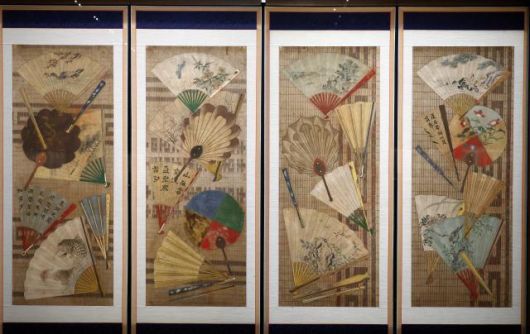 |
부채를 그린 백선도 병풍. |
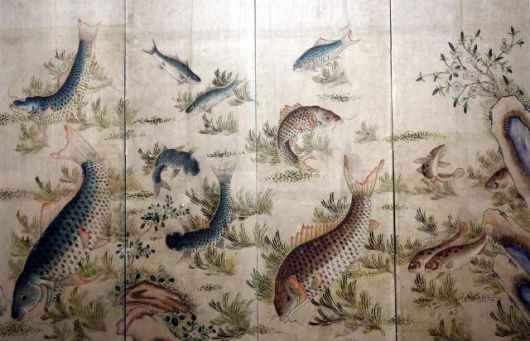 |
어락도 10폭병풍. |
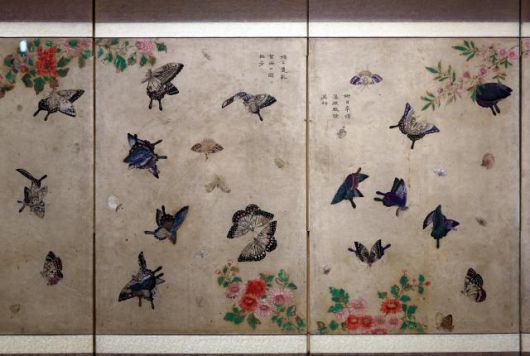 |
화접도 10폭병풍 |
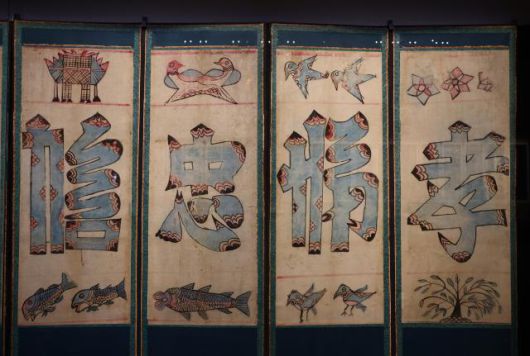 |
제주 문자도8폭병풍. |
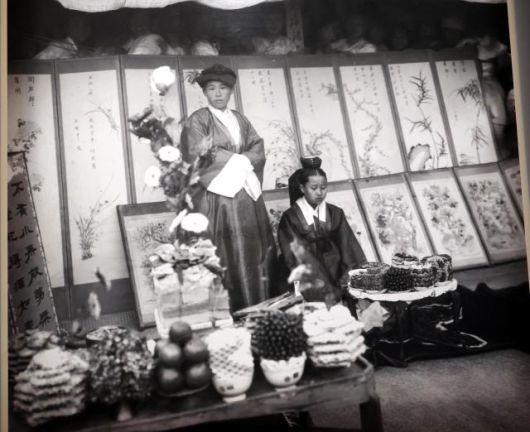 |
1911년 함경남도 북청의 결혼식 사진. 신부 뒤로 민화 병풍을 둘렀다. |
Another notable work is a "Baekseondo" (painting of one hundred fans) folding screen. Its eight panels present a rich tapestry of layered fan illustrations, each adorned with diverse themes ranging from serene landscapes to delicate depictions of flowers and birds. This multi-image format allowed for the simultaneous appreciation of various artistic expressions.
The emotionally resonant "Eobyeonseongnyongdo" (painting of fish transforming into a dragon), symbolizing the arduous journey to success in civil service examinations, highlights the cultural significance of these artworks as gifts of encouragement.
Beyond their symbolic weight, the minhwa on display are often imbued with a distinctive humor.
A "Gosainmuldo" 6-panel folding screen (painting of historical figures and Taoist immortals) reveals whimsical characterizations.
Similarly engaging are the depictions of animals, such as a tiger alongside a phoenix and rabbit in a 19th-century "Geumsudo" (painting of birds and animals), and a seemingly frolicking pair of tigers in an early 20th-century "Hojakdo" 4-panel screen depicting magpies and tigers.
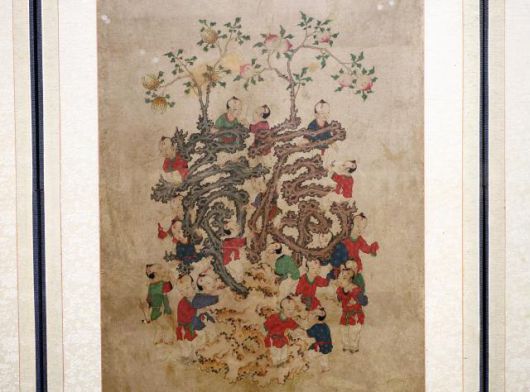 |
자손번창을 기원하는 백동문자도 병풍. 문자사이로 20명의 동자들을 그려 넣었다. |
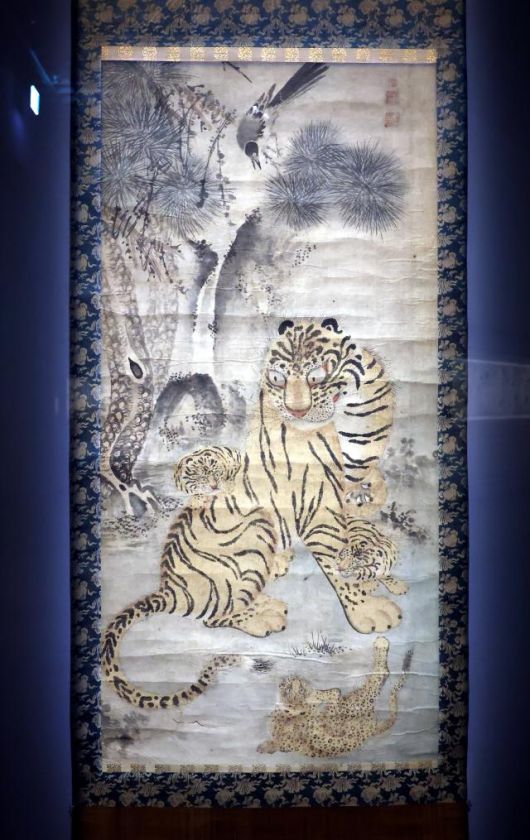 |
호작도. 사악한 기운을 쫓는 호랑이와 좋은 소식을 전하는 까치를 함께 그렸다. |
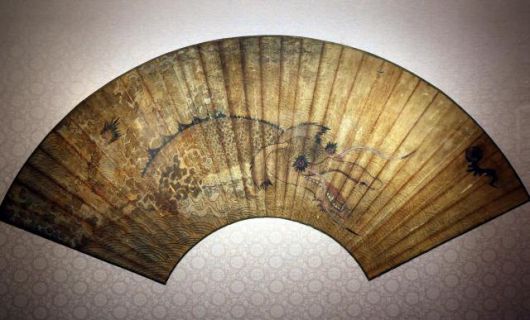 |
선면이무기도. 부채에 전설의 동물 이무기를 그렸다. |
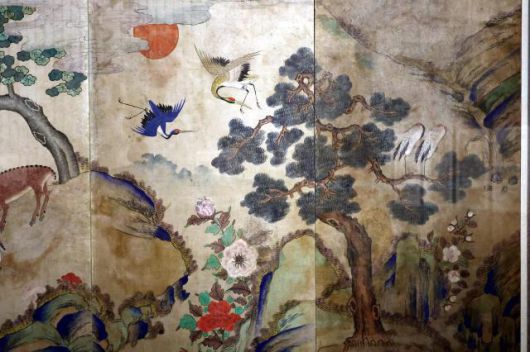 |
무릉장생도 8폭 병풍. 십장생과 길한 징조를 나타내는 동물과 꽃이 어우러진 이상적인 경치를 그렸다. |
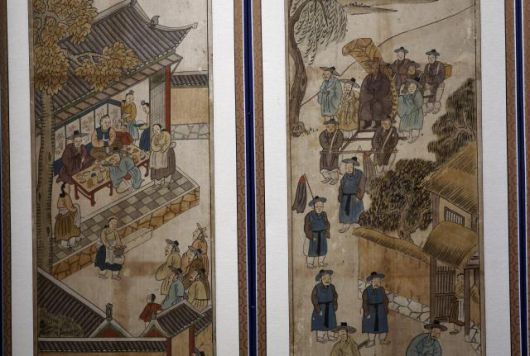 |
평생도 8폭 병풍. 이상적인 무관의 삶을 그린 무관평생도이다. |
 |
백납도 10폭 병풍. 각 폭에 여러점의 그림과 소품을 그려 넣었다. 하나의 병풍으로 여러 작품을 감상하고자 했던 당시의 문화이다. |
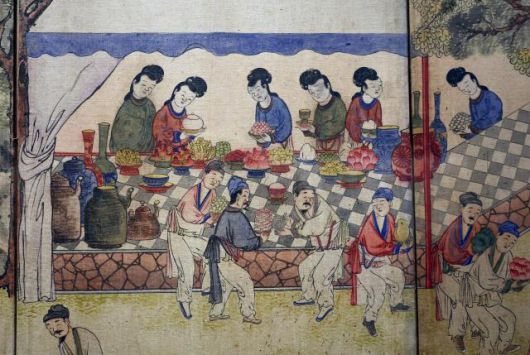 |
곽분양행락도 10폭 병풍. |
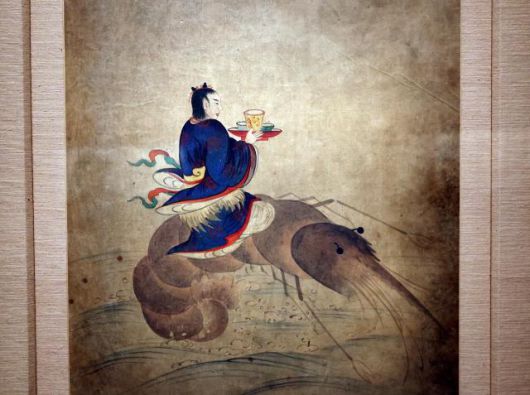 |
하상선인도. 새우를 타고 바다를 건너는 신선을 그렸다. |
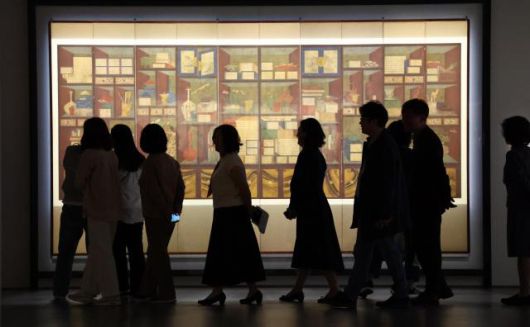 |
전시장을 둘러보는 관람객들. |
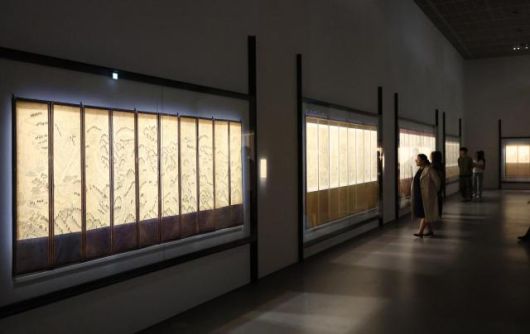 |
전시장 모습. |
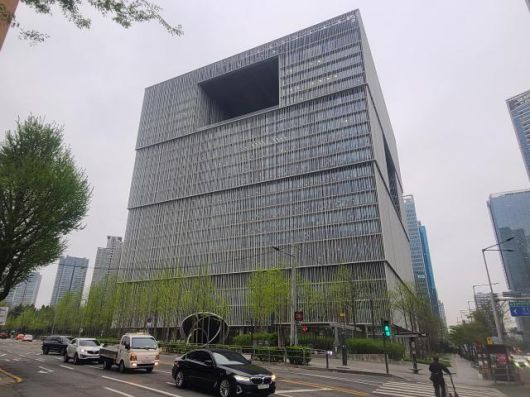 |
미술관이 있는 아모레퍼시픽 사옥. |
Cho Bo-hee 부장 jobo@ajupress.com
- Copyright ⓒ [아주경제 ajunews.com] 무단전재 배포금지 -
 이 기사의 카테고리는 언론사의 분류를 따릅니다.


![[종합] '48세 이혼' 홍진경, 결국 속내 밝혔다…돌싱 후 첫 크리스마스에 "울다가 웃어" ('옥문아')](/_next/image?url=https%3A%2F%2Fthumb.zumst.com%2F256x144%2Fhttps%3A%2F%2Fstatic.news.zumst.com%2Fimages%2F77%2F2025%2F12%2F26%2F33c12baba89a49bc91f10d8ac607b354.jpg&w=384&q=100)

![가수 맹유나, 심장마비 돌연사…29세 교수 임용 앞두고 비보 [Oh!쎈 이슈]](/_next/image?url=https%3A%2F%2Fthumb.zumst.com%2F256x144%2Fhttps%3A%2F%2Fstatic.news.zumst.com%2Fimages%2F29%2F2025%2F12%2F26%2Feda5f3b658554aceb5ffad4928852296.jpg&w=384&q=100)


!['건강 적신호' 윤종신, 결국 링거 맞았다…"이제 내 맘대로 노래 못할 듯" [★해시태그]](/_next/image?url=https%3A%2F%2Fthumb.zumst.com%2F256x144%2Fhttps%3A%2F%2Fstatic.news.zumst.com%2Fimages%2F108%2F2025%2F12%2F26%2F24da8f68917d4152bea8cf57aba81f49.jpg&w=384&q=100)