
 |
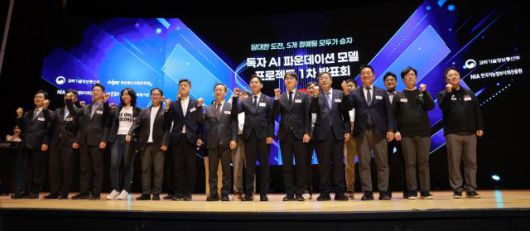
The Science and ICT Ministry hosts the first contest to select sovereign AI foundation on Dec. 30, 2025 (Yonhap) |
Artificial intelligence has already moved beyond the realm of innovation and into the architecture of everyday life. It now shapes decisions in finance, medicine, education, law and public administration. For years, efficiency and speed surged ahead, while accountability and ethical clarity lagged behind. Seen in this light, the enactment of a comprehensive AI framework is neither premature nor excessive. At its core, it is an attempt to restore balance between technological power and human responsibility.
The Act’s greatest strength lies in its clear recognition that AI is no longer a neutral tool. By designating certain systems as “high-risk” and imposing obligations related to oversight, non-discrimination and explainability, the law affirms a foundational democratic principle: technology must serve human dignity, not erode it. For the elderly, persons with disabilities and digitally vulnerable populations, this legal recognition provides a long-overdue safeguard.
Equally important, the law clarifies responsibility. The convenient excuse that “the algorithm made the decision” is no longer acceptable. Institutions and professionals that deploy AI systems must now answer for their outcomes. In sectors such as healthcare, finance and law, this shift will inevitably reshape operational practices. Governance of artificial intelligence becomes not optional, but essential.
Yet an honest editorial must extend beyond praise. The true challenge lies not in the intention of regulation, but in its design, calibration and proportionality.
One concern is the breadth of the “high-risk AI” classification. As currently structured, wide swaths of professional and public-service activity could fall under this category, regardless of actual risk levels. Regulation that fails to distinguish degrees of harm risks becoming blunt rather than precise. When everything is treated as high-risk, regulatory focus is diluted, and innovation is constrained without meaningfully improving safety.
Another issue lies in the legal codification of explainability and transparency requirements that do not fully reflect the technical realities of large language models and deep-learning systems. These systems often operate through probabilistic inference rather than traceable causal reasoning. Mandating explanations that technology cannot meaningfully provide risks generating compliance paperwork rather than genuine accountability. Law must rest on technological reality, not aspiration.
The Act’s emphasis on ex-ante controls—such as registration, pre-approval and prior inspection—also warrants scrutiny.
Artificial intelligence advances through experimentation, iteration and failure. Heavy upfront regulation disproportionately burdens startups and smaller developers, raising barriers to entry and consolidating advantages for firms large enough to absorb compliance costs.
This risk becomes more acute in a global context. The European Union, whose regulatory philosophy heavily influenced Korea’s framework, possesses market scale and political cohesion that allow regulation itself to function as leverage. South Korea does not enjoy that advantage. It remains structurally weaker in foundational AI models and global platforms compared with American technology giants.
Under these conditions, stringent domestic regulation may weaken local firms while global players adapt, absorb costs or circumvent constraints. Regulation intended to protect technological sovereignty could, paradoxically, erode it.
The guiding principle must therefore be simple and rooted in common sense: regulation is a means, not an end. Its purpose is to protect citizens, preserve trust and enable sustainable innovation—not to signal virtue or entrench bureaucratic control.
A democratic society grounded in truth, justice and freedom must avoid two extremes. One is technological laissez-faire, which sacrifices human dignity to speed and profit. The other is regulatory overreach, which stifles creativity and shifts advantage to actors least accountable to the public.
South Korea’s AI Basic Act points in the right direction, but it must not be treated as a finished monument. In a fast-moving technological era, law must remain living, revisable and humble. Post-hoc accountability, sector-specific calibration, expanded regulatory sandboxes and continuous impact assessments are not concessions—they are necessities.
The real test begins after enforcement. Will lawmakers and regulators monitor real-world effects with intellectual honesty? Will they revise provisions that inhibit innovation without enhancing safety? Will they distinguish symbolic regulation from effective governance?
History suggests that societies succeed not by choosing between innovation and ethics, but by insisting on both. Artificial intelligence will shape the next generation of economic and social power. How it is governed will determine whether that power expands freedom or diminishes it.
On this first day of enforcement, the question is not whether South Korea has regulated AI—but whether it will regulate wisely, courageously and with the confidence to correct itself. That, ultimately, is the measure of a mature democracy in the age of intelligent machines.
- Copyright ⓒ [아주경제 ajunews.com] 무단전재 배포금지 -
 이 기사의 카테고리는 언론사의 분류를 따릅니다.


![박신혜, 반지하 생활→데뷔 결심..“배우하면 돈 多 벌겠다 생각” (‘유퀴즈’)[핫피플]](/_next/image?url=https%3A%2F%2Fthumb.zumst.com%2F256x144%2Fhttps%3A%2F%2Fstatic.news.zumst.com%2Fimages%2F29%2F2026%2F01%2F22%2Fda8c894e432041fda617bd3b2f8cb217.png&w=384&q=100)