[박종진 기자]
1. 산천 김명희, 추사의 그늘을 벗어나 독립된 학문의 경지를 일구다
조선 후기 금석학과 고증학의 거두로 평가받는 추사 김정희의 곁에는, 그의 가장 가까운 학문적 동반자이자 동생으로 알려진 산천(山泉) 김명희(金命喜, 1788~1857)가 있었다. 산천은 단순히 형의 조력자에 머물지 않고, 연경{燕京, 베이징}에서 접한 새로운 학술 정보를 수집해 형과 교유망에 전하며 학계에서 중요한 역할을 한 인물로 평가된다.
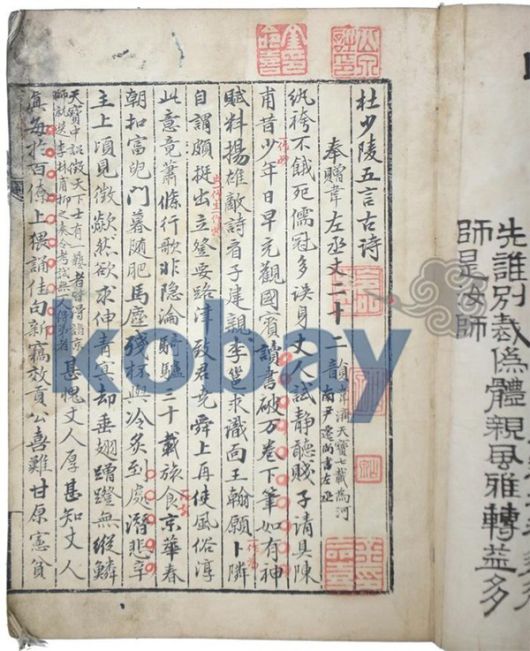
산천이 직접 정서(正書)한 것으로 전하는 필사본 『두소릉오언고시(杜少陵五言古詩)』 1책은, 그가 평생 견지했던 학문적 성실함을 상징적으로 드러내는 유물이다. 총 97장에 이르는 방대한 분량을 한 자 한 자 흐트러짐 없이 옮겨 적은 이 책에는, 성인(聖人)의 문장을 자신의 내면으로 체화하고자 했던 한 선비의 치열한 수양 과정이 고스란히 배어 있다.
 |
1. 산천 김명희, 추사의 그늘을 벗어나 독립된 학문의 경지를 일구다
조선 후기 금석학과 고증학의 거두로 평가받는 추사 김정희의 곁에는, 그의 가장 가까운 학문적 동반자이자 동생으로 알려진 산천(山泉) 김명희(金命喜, 1788~1857)가 있었다. 산천은 단순히 형의 조력자에 머물지 않고, 연경{燕京, 베이징}에서 접한 새로운 학술 정보를 수집해 형과 교유망에 전하며 학계에서 중요한 역할을 한 인물로 평가된다.
 |
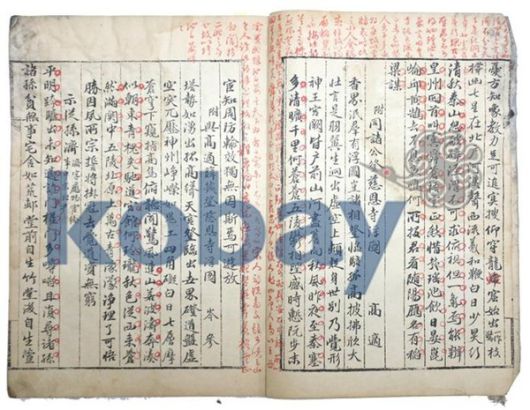
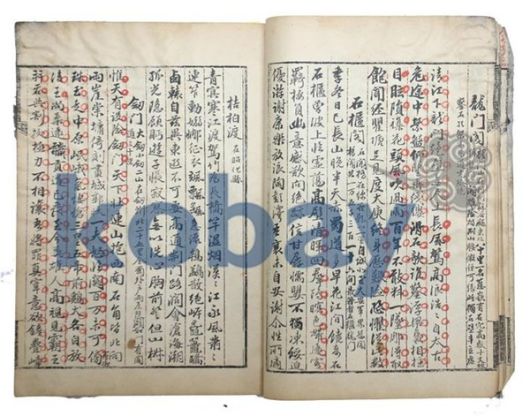
산천이 직접 정서(正書)한 것으로 전하는 필사본 『두소릉오언고시(杜少陵五言古詩)』 1책은, 그가 평생 견지했던 학문적 성실함을 상징적으로 드러내는 유물이다. 총 97장에 이르는 방대한 분량을 한 자 한 자 흐트러짐 없이 옮겨 적은 이 책에는, 성인(聖人)의 문장을 자신의 내면으로 체화하고자 했던 한 선비의 치열한 수양 과정이 고스란히 배어 있다.
권두와 내지에 찍힌 '산천시인(山泉詩印)', '김명희인(金命喜印)' 등의 장서인은 이 책이 산천의 서재에서 오랫동안 곁에 두고 읽힌 정신적 지침서였음을 짐작하게 한다. <2017년 4월 ㈜코베이옥션 삶의흔적 경매전 출품작>
2. 가계를 넘어선 유대, 표지 내지에 새겨진 추사의 격려
이 필사본의 진면목은 겉표지 안쪽에서 더욱 선명해진다. 추사 김정희는 어린 시절, 아들이 없던 백부 김노영(金魯永)의 양자로 입적되어 법제상으로는 김명희와 종형제에 가까운 관계가 되었지만, 두 사람 사이의 예술적 교감은 실제 형제에 못지않게 깊었던 것으로 전해진다.
 |
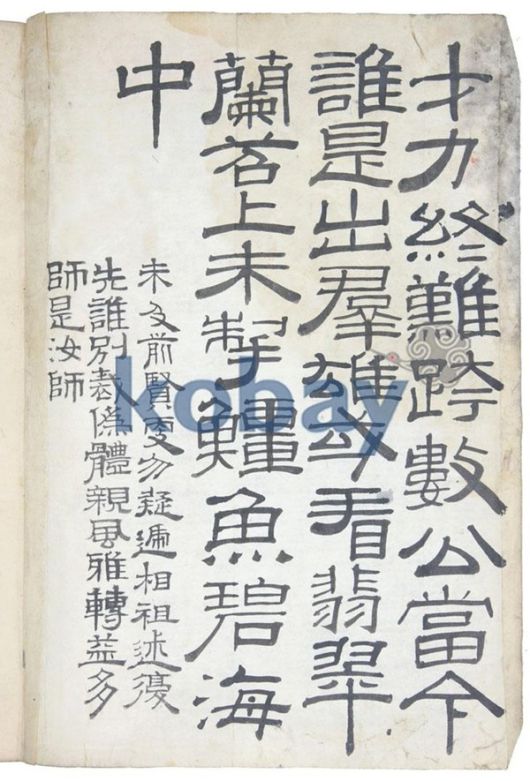
동생이 정성을 다해 필사본을 완성하자, 형인 추사는 두보의 「희위육절구(戱爲六絶句)」 가운데 두 수를 추사체 특유의 고졸(古拙)한 필치로 표지 안쪽에 써 올렸다.
기사(其四)
才力終難跨數公 (재력종난과수공) 재주와 힘으로는 끝내 앞선 명가(名家)들을 넘어서기 어려우니,
當今誰是出群雄 (당금수시출군웅) 당금(當今)에 누가 저 군웅들 사이에서 으뜸이라 하겠는가.
或看翡翠蘭苕上 (혹간비취란초상) 난초 줄기 위에 앉은 물매새(비취) 같은 섬세함은 혹 보일지 몰라도,
未掣鯨魚碧海中 (미체경어벽해중) 푸른 바다의 고래를 낚아채는 장쾌한 기상은 끝내 보이지 않는구나.
기육(其六)
未及前賢更勿疑 (미급전현갱물의) 옛 현인들에게 미치지 못함을 더는 의심치 말라.
遞相祖述復先誰 (체상조술부선수) 서로 전하고 본받으며 이어왔으니, 누가 앞서고 누가 뒤처졌다 하겠는가.
別裁僞體親風雅 (별재위체친풍아) 그릇된 문체는 가려내고 시경(詩經)의 정수(風雅)에 다가서며,
轉益多師是汝師 (전익다사시여사) 널리 배워 스승으로 삼는 것, 이것이 바로 아우님의 참된 스승이라네.
두보의 이 시는 옛사람의 법도를 잇되 그에 갇히지 않고, 스스로의 목소리로 새로운 세계를 열어야 한다는 비평적 메시지를 담고 있다. 추사가 남긴 글귀는 단순한 축하나 장식이 아니라, 학문과 예술의 길을 걷는 이가 평생 마음에 새겨야 할 '법고창신(法古創新)'의 원칙을 환기하는 준엄한 조언처럼 다가온다.
묵직한 예서풍의 형 글씨와 정갈한 해서체로 채워진 동생의 본문이 한 권의 책 안에서 만들어내는 대비와 조화는, 조선 사대부 가문이 지향했던 학문적 자부심과 심미적 감각이 어떤 모습이었는지를 상징적으로 보여준다.
 |
3. 조선 문인들의 정취(情趣), 문장을 통해 서로의 삶을 책임지다
조선 문인들에게 글을 쓰고 주고받는 일은 기록을 넘어 인격과 인격이 마주 서는 하나의 의식에 가까웠다. 스승이 제자의 앞날을 축복하며 자호(自號)를 지어 주고 기문(記文)을 써 주던 일, 선조의 문집을 간행하며 당대 명망 높은 학자에게 서문과 발문을 청해 가문의 학풍을 공인받던 관행 속에는, 문장을 통해 서로의 삶과 명예를 보증해 주려는 마음이 깃들어 있었다.
 |
부친의 사후에 지인을 통해 어렵게 청해 받던 묘갈명이나 신도비명 또한 마찬가지였다. 물론 현실의 비문이 언제나 이상적인 믿음만으로 쓰인 것은 아니었겠지만, 적어도 조선의 문인들이 꿈꾸었던 전형 속에서 이런 글쓰기는 고인과 생존자, 그리고 문장을 짓는 자 사이의 깊은 신뢰와 의리를 전제로 하는 일이었다.
산천의 필사본 위에 더해진 추사의 글씨는, 바로 그 세계의 한 장면으로서, 문장을 통해 서로의 생애를 비추어 주고 책임지려 했던 조선 지식인들의 고귀한 '정(情)'과 '의리(義理)'를 오늘 우리 앞에 조용히 증언한다.
 |
4. 필묵(筆墨)의 엄중함, 학자의 문장은 평생의 책임이다
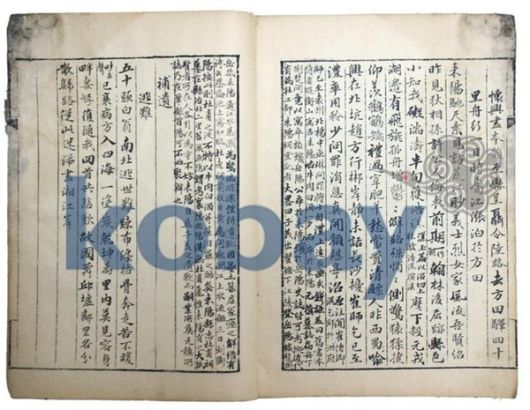
고문헌을 대하고 그 가치를 오늘의 언어로 길어 올리는 일은, 수백 년 전의 정신과 지금 여기의 사유를 맞닿게 하는 무거운 작업이다. 산천의 필사본 상단 곳곳에 남아 있는 해묵은 얼룩과 습기의 흔적은, 그 책을 곁에 두고 평생을 스스로 경계하며 살았을 한 학자의 체온이자, 쉽게 지워지지 않는 시간의 퇴적물처럼 느껴진다. 한 번 세상에 나온 글은 다시 주워 담을 수 없는 자국이 되어, 훗날의 시선과 평가를 온전히 감당해야 한다는 사실을, 우리는 이 빛바랜 먹 자국 앞에서 새삼스럽게 마주하게 된다.
'박사(博士)'라는 칭호는 본디 지식의 양을 과시하는 이름표라기보다, 자신이 내뱉은 언어와 문장에 평생 책임을 지겠다는 약속에 가까워야 할 것이다. 자극적인 수사나 편향된 시선으로 시대의 유행에 편승하기보다, 유물이 품은 본연의 의미를 가능한 한 중도(中道)의 시선에서 헤아리려 애쓰는 것, 그것이 학문을 업으로 삼은 이가 놓지 말아야 할 최소한의 자세일지 모른다.
산천과 추사 형제가 나누었던 깊은 신뢰와 무거운 문장을 떠올리며, 지금 우리가 남기는 기록 한 줄이 훗날 어떤 발자국으로 남을 것인지, 오늘의 필묵을 들고 있는 모든 이가 스스로에게 조용히 물어야 할 때다.
 |
[Column] "The Fragrance of Ink: Brotherly Devotion and Academic Responsibility"
By Seung-man Kim, Ph.D.
Ph.D. in Literature, Korea University (Classical Translation)
Specialist in Ancient Manuscripts & Fine Arts, Kobay Auction Co., Ltd
Kim Myeong-hui's Manuscript of The Five-Character Ancient Poems of Du Shaoling
1. Kim Myeong-hui (Sanchon): Carving an Independent Scholarly Path Beyond Chusa's Shadow
Beside Kim Jeong-hui (Chusa), the legendary master of epigraphy and classicism in the late Joseon Dynasty, stood his closest academic partner and brother, Kim Myeong-hui (Sanchon, 1788–1857). Sanchon was far more than a mere assistant to his brother; he is evaluated as a pivotal figure in the scholarly world, having collected and disseminated new academic information from Yanjing (Beijing) to Chusa and their wider intellectual network.
The manuscript of The Five-Character Ancient Poems of Du Shaoling (Du Shaoling Wu-yan Gu-shi), transcribed in formal hand by Sanchon himself, is a relic that symbolically reveals the academic integrity he maintained throughout his life. Across its 97 pages of extensive content, transcribed character by character without a single lapse in concentration, lies the arduous process of a scholar striving to internalize the spirit of a sage. The library seals—Sanchon-si-in (Poetry Seal of Sanchon) and Kim-myeong-hui-in (Seal of Kim Myeong-hui)—affixed to the preface and inner pages suggest that this book was a spiritual guide kept long in his study.
2. Bonds Beyond Lineage: Chusa's Encouragement Inscribed on the Cover
The true essence of this manuscript becomes even clearer on the inner side of its cover. In his youth, Kim Jeong-hui was adopted by his uncle Kim No-yeong, who had no heir. Although this made him legally a cousin to Kim Myeong-hui, their artistic and intellectual bond is known to have been as deep as any biological brothers. When Sanchon completed this painstaking transcription, Chusa inscribed two quatrains from Du Fu's Six Playful Quatrains (Xi-wei Liu-jue-ju) on the inner cover in his signature Go-jol (archaic and rustic) clerical script.
Quatrain 4
In talent and strength, it is ultimately hard to surpass the masters of old, Who among us today stands out as a true hero? One might see the delicacy of a kingfisher perched on a orchid stalk, But one cannot yet haul a great whale from the depths of the blue sea.
Quatrain 6
Doubt no longer that you fall short of the ancient sages. As each has inherited and passed down the lineage, who can say who came first? Distinguish the false styles to draw closer to the true essence of poetry, To learn from many and make them your teachers—that is your true master.
These poems by Du Fu carry a critical message: to inherit the laws of the ancients without being imprisoned by them, and to open a new world with one's own voice. The words left by Chusa are not mere celebration or decoration; they serve as a solemn reminder of the principle of Beop-go-chang-sin (creating the new based on the old) that every scholar and artist must cherish for a lifetime. The contrast and harmony between the heavy clerical-style calligraphy of the elder brother and the neat, formal script of the younger brother within a single book symbolically demonstrate the academic pride and aesthetic sensibility pursued by the Joseon literati.
3. The Refinement of Joseon Literati: Taking Responsibility for Each Other's Lives through Writing
For the Joseon literati, the act of writing and exchanging texts was less a matter of record-keeping and more a ritual where character met character. Whether it was a teacher bestowing a pen name (jaho) upon a student with a commemorative essay (gimun), or requesting a preface or postscript from a renowned scholar for a family collection to validate their academic lineage, these practices were rooted in a desire to guarantee each other's lives and honor through the written word.
The same was true for the epitaphs (myogalmyeong or sindobimyeong) requested with great difficulty from acquaintances after a father's passing. While historical inscriptions may not always have been written with ideal sincerity, in the archetypal vision of the Joseon literati, such writing presupposed a profound trust and devotion between the deceased, the survivors, and the writer. Chusa's calligraphy added to Sanchon's manuscript stands as a scene from that world, quietly testifying to the noble Jeong (affection) and Uiri (devotion) of Joseon intellectuals who sought to illuminate and take responsibility for each other's lives through their prose.
4. The Solemnity of Ink: A Scholar's Writing is a Lifelong Responsibility
Engaging with ancient documents and drawing their value into today's language is a heavy task that connects the spirit of centuries past with the thoughts of the here and now. The aged stains and traces of moisture remaining at the top of Sanchon's manuscript feel like the physical temperature of a scholar who lived a life of self-restraint with this book by his side—a sediment of time that cannot be easily erased. We are reminded anew before these faded ink marks that once a piece of writing is released into the world, it becomes an indelible footprint, destined to fully endure the scrutiny and evaluation of the future.
The title of 'Doctor' (Bak-sa) should, in its essence, be less a label for flaunting the depth of one's knowledge and more a promise to take lifelong responsibility for the words and sentences one utters. Rather than following ephemeral trends with provocative rhetoric or biased perspectives, perhaps the minimum duty for one who treats scholarship as a vocation is to strive to discern the inherent meaning of a relic from a balanced, 'Middle Path' (Jung-do) perspective. Recalling the profound trust and the weight of the prose shared by the brothers Sanchon and Chusa, it is time for everyone holding the brush and ink today to quietly ask themselves: what kind of footprint will the single line of record we leave today become in the future?
<저작권자 Copyright ⓒ 국제뉴스 무단전재 및 재배포 금지>
 이 기사의 카테고리는 언론사의 분류를 따릅니다.