 |
Courtesy of KAIST |
SEOUL, January 18 (AJP) - A consortium of international researchers has called for a new alliance of mid-sized nations to challenge the overwhelming dominance of the United States and China in artificial intelligence.
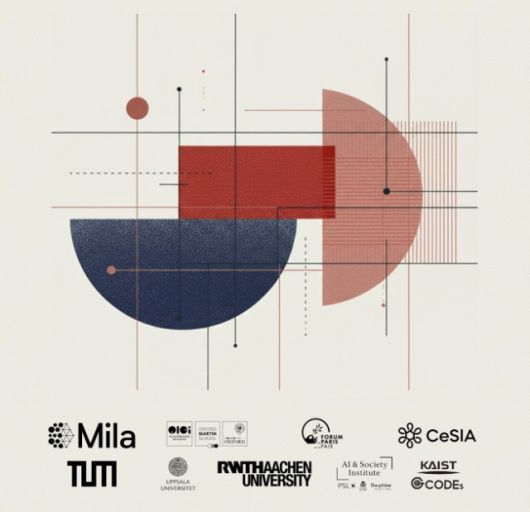
The Korea Advanced Institute of Science and Technology (KAIST) released a policy report Sunday titled "A Blueprint for Multinational Advanced AI Development." The document, co-authored with scholars from the University of Oxford, Canada's Mila institute, and Germany's RWTH Aachen University, argues that countries like South Korea, the United Kingdom, and Canada must pool their resources to secure technological independence.
The report paints a stark picture of the current landscape, noting that approximately 90 percent of the world's AI computing capacity is concentrated in the United States and China. The authors warn that this imbalance effectively blocks other nations from developing "frontier" AI models on their own, forcing them into a state of technological dependency on a handful of superpowers and Big Tech firms.
To counter this, the researchers propose a "Bridge Power" coalition. The strategy targets nations that have advanced digital infrastructure and research talent but lack the massive capital and energy resources of the two global hegemons. The report specifically identifies South Korea, Canada, the United Kingdom, Germany, and Singapore as key candidates for this bloc.
"In an environment where geopolitical competition is intensifying, solidarity among 'AI Bridge Power' nations is essential to maintain competitiveness and responsible AI development," said Yoshua Bengio, a Turing Award laureate and co-author of the report.
The blueprint suggests modeling this cooperation after CERN, the European Organization for Nuclear Research. Instead of particle physics, the proposed body would focus on sharing the heavy burden of AI infrastructure. Member nations would pool computing resources, establish protocols for cross-border data training, and create a shared system for research talent to move freely between countries.
According to the report, this approach would allow member nations to build high-level AI models that reflect their own languages and cultural values, rather than relying on systems imported from Silicon Valley or Beijing.
Park Kyung-ryul, a KAIST professor who led the initiative, said the proposal offers a "realistic alternative path" for nations caught in the crossfire of the current tech war. He noted that such an alliance could help these countries assert leadership in ethical AI governance by presenting a united front on global challenges.
The findings were the result of a collaboration between computer scientists, economists, and legal experts from institutions including the Future Society and the Paris Peace Forum.
Park Sae-jin Reporter swatchsjp@ajunews.com
- Copyright ⓒ [아주경제 ajunews.com] 무단전재 배포금지 -
 이 기사의 카테고리는 언론사의 분류를 따릅니다.