[박종진 기자]
1. '만장(輓章)', 이승의 마지막 문장을 바람에 띄우다
조선시대 상장례(喪葬禮) 행렬의 선두에는 고인의 공덕을 기리며 바람에 길게 나부끼는 비단 혹은 종이 깃발들이 있었다. 이를 '만장(輓章)'이라 한다. '수레를 끈다'는 의미의 '만(輓)'에서 유래한 이 깃발은 본래 상여를 끄는 이들의 노래에서 시작되어, 점차 망자를 애도하는 글인 '만사(輓詞)'를 적어 올리는 시각적 예우로 정착되었다.
사림처사(士林處士) 수암(修巖) 심능백(沈能百, 1783~1862)·심능서(沈能瑞)·심능팔(沈能八) 등 3인이 매부의 죽음을 슬퍼하며 각각 작성한 세 폭의 만장은 단순한 조사(弔詞)를 넘어선다. 이는 고인의 덕망을 세상에 공포하고 저승으로 가는 길을 호위하는 영예로운 '마지막 길동무'이자, 산 자가 죽은 자에게 줄 수 있는 최고의 문학적 헌사였다.
 |
1. '만장(輓章)', 이승의 마지막 문장을 바람에 띄우다
조선시대 상장례(喪葬禮) 행렬의 선두에는 고인의 공덕을 기리며 바람에 길게 나부끼는 비단 혹은 종이 깃발들이 있었다. 이를 '만장(輓章)'이라 한다. '수레를 끈다'는 의미의 '만(輓)'에서 유래한 이 깃발은 본래 상여를 끄는 이들의 노래에서 시작되어, 점차 망자를 애도하는 글인 '만사(輓詞)'를 적어 올리는 시각적 예우로 정착되었다.
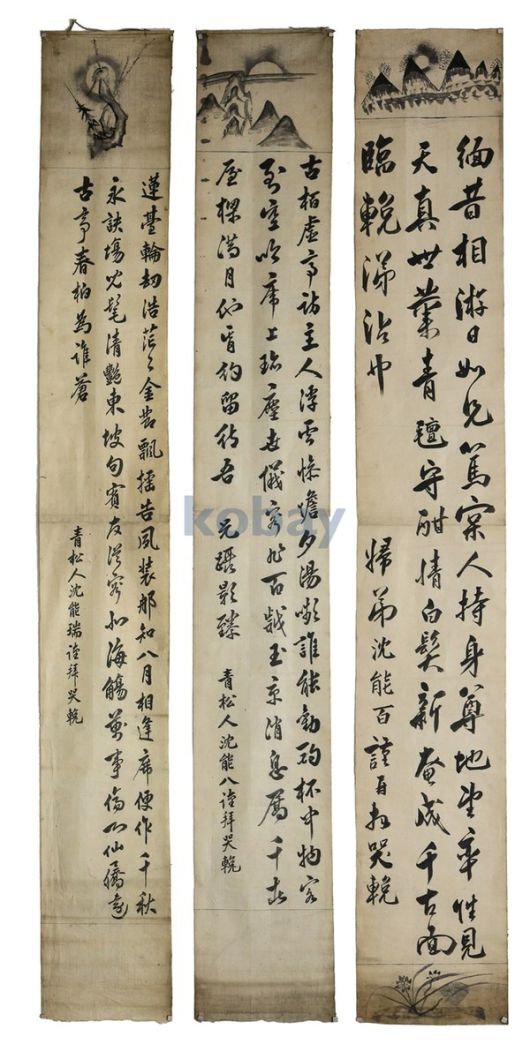 |
사림처사(士林處士) 수암(修巖) 심능백(沈能百, 1783~1862)·심능서(沈能瑞)·심능팔(沈能八) 등 3인이 매부의 죽음을 슬퍼하며 각각 작성한 세 폭의 만장은 단순한 조사(弔詞)를 넘어선다. 이는 고인의 덕망을 세상에 공포하고 저승으로 가는 길을 호위하는 영예로운 '마지막 길동무'이자, 산 자가 죽은 자에게 줄 수 있는 최고의 문학적 헌사였다.
[심능백의 만사]
緬昔相游日 옛날 서로 종유하던 날 생각하니,
如兄篤實人 형은 독실한 사람이었던 것 같네.
持身尊地望 몸 다스려 지위와 명망을 높였으며,
率性見天眞 본성을 쫓아 천진함 잘 드러내었네.
世業靑氊守 대대로 가업 이어 관복을 잘 간수하였고,
酣情白髮新 주고받은 '술' 정 속에 백발이 새로워졌네.
奄成千古面 문득 천 년 전인 듯 아득한 얼굴로 다가오니,
臨輓涕沾巾 만사를 올리며 흐르는 눈물이 소매를 적시네.
 |
2. 유교적 질서와 토착 신앙이 빚어낸 '귀천(歸天)'의 드라마
조선인들에게 죽음은 허무한 소멸이 아닌, '혼(魂)'은 하늘로 올라가고 '백(魄)'은 땅으로 돌아가는 자연스러운 순환이었다. 장례는 그 분리된 존재들을 배웅하는 정성스러운 절차의 연속이었다.
운명하는 순간을 지켜보는 '임종(臨終)'과 지붕 위에서 혼을 부르는 '고복(皐復)'은 떠나는 넋을 붙잡으려는 인간의 간절한 의지였으며, 시신을 씻기는 '염습(殮襲)'과 상복을 입는 성복'(成服)'은 망자를 조상신으로 격상시키는 과정이었다.
 |
이 드라마의 절정은 '발인(發靷)'이었다. 상여가 집을 떠날 때 울려 퍼지는 "이제 가면 언제 오나~! 어허야~! 어허야~!"라는 상여 소리는 슬픔을 극대화하는 동시에 발을 맞추는 기능적 소리였다. 이는 "문득 천 년 전인 듯 아득한 얼굴로 다가온다"라는 심능백의 고백처럼, 돌이킬 수 없는 단절을 소리로 선언하는 의식이다. 만장은 이 소리 행렬의 선두에서 펄럭이며 이승과 저승을 잇는 시각적 가교가 되었다.
 |
3. 오봉(五峯)에 지는 해와 붓끝에 담긴 시각적 비애
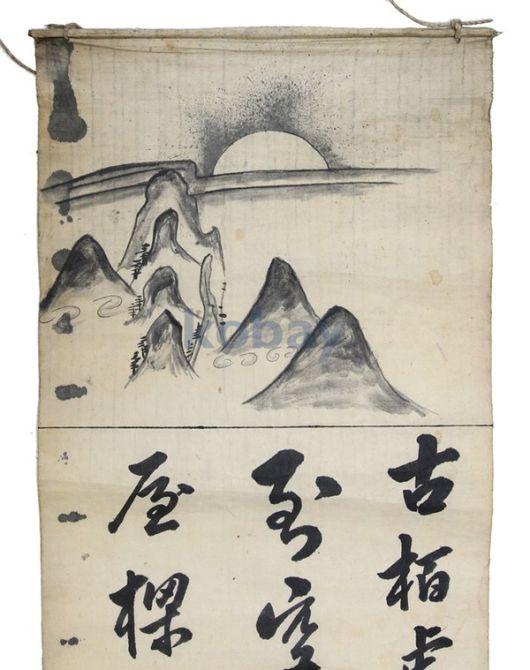
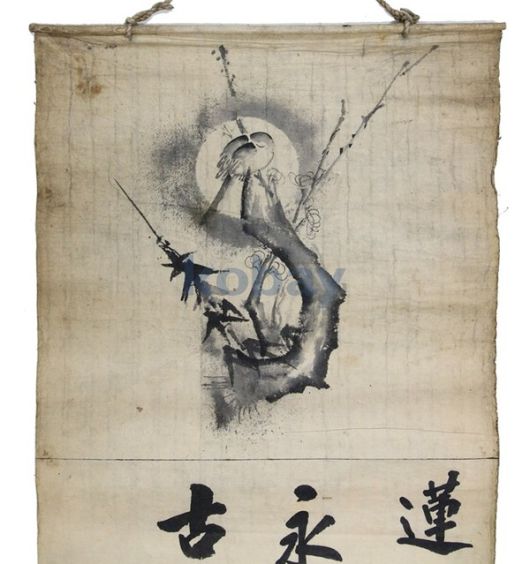
만장 상단의 그림들은 문자 그 이상의 메시지를 던진다. '오봉(五峯)과 그 너머로 사라지는 태양'은 생의 마감을 상징하는 고도의 은유다. 산맥은 변치 않는 세상의 질서를, 지는 해는 거스를 수 없는 생자필멸(生者必滅)의 섭리를 보여준다. 또한 나뭇가지에 앉아 홀로 울고 있는 새는 심능백이 시에서 읊조린 "눈물이 소매를 적시네"라는 비애의 시각적 발현이다. 그는 만사에서 고인을 '독실한 사람'이자 '천진함을 간직한 이'로 묘사했다. 갑자기 아득한 존재가 되어버린 망자를 향한 그리움이 묵직한 필치와 그림 속에 녹아들어, 시대를 초월한 보편적 공감을 불러일으키고 있다.
 |
4. 형식의 숭고함 속에 감춰진 실존적 인연의 깊이
사회문화적 측면에서 볼 때, 만장은 가문의 세를 과시하는 도구이기도 했다. 만장의 숫자가 고인의 사회적 네트워크를 증명했기에 명문가 장례에서는 수백 개의 만장이 거리를 메우기도 했다. 그러나 심능백의 만장에서 우리가 주목해야 할 것은 권위가 아닌 '관계의 실존'이다.
그는 형식화된 유교 장례의 틀 안에서도 고인의 삶을 '술을 즐기던 모습'이나 '천진한 성품'으로 솔직하게 묘사했다. 이는 만장이 단순한 가문의 위세를 넘어, 인간과 인간이 맺은 인연의 깊이를 측정하는 실증적 척도였음을 보여준다. 박제된 명예보다 뜨거운 '인간의 온도'가 묵향 속에 살아있는 것이다.
 |
5. 사자의 서(書)와 에피타프: 인류 보편의 애도 문법
이처럼 기록을 통해 영생을 꿈꾸는 욕구는 세계사적 보편성을 지닌다. 고대 이집트의 '사자의 서(Book of the Dead)'가 사후 세계의 안녕을 빌며 파피루스에 주문을 채웠다면, 유럽의 '에피타프(Epitaph, 묘비명)'는 짧은 문장으로 고인의 정체성을 영구히 기록하였다. 아프리카 가나의 '판타지 관(Fantasy Coffins)' 역시 망자의 열정을 형상화하여 죽음을 생의 완성으로 축하하였다.
조선의 만장은 이들과 궤를 같이하면서도, 고인의 삶을 깃발이라는 매체에 문학과 회화로 압축해 냈다는 점에서 독창적인 '추모 예술'의 지위를 갖는다. 서구의 사례가 물질적 영속성에 치중한다면, 만장은 바람에 흔들리는 비단 위에서 찰나와 영원을 동시에 노래하는 문학적 엄숙주의를 견지하고 있다.
 |
6. 디지털 시대, 만장이 던지는 진정한 '애도'의 가치
빠르게 변모하는 현대 사회에서 장례는 간소화되고, 종이 깃발 대신 디지털 부고 문자가 그 자리를 대신하고 있다. 그렇기에 청송 심씨의 만장이 전하는 울림은 지금, 이 시대에 더욱 절실하게 다가온다. 만장은 고인을 단순히 '처리'해야 할 대상이 아니라, 시와 그림으로 정성껏 '기억'해야 할 존재로 대우했다.
인생의 마지막 순간에 바쳐진 이 정성스러운 기록은 오늘날 우리에게 '잘 사는 것(Well-being)'만큼이나 '존엄하게 헤어지는 것(Well-dying)'이 얼마나 중요한지를 역설한다. 2025년의 끝자락에서 우리가 마주해야 할 것은 죽음에 대한 공포가 아니라, 만장의 깃발처럼 당당하고 아름답게 내보일 수 있는 우리 삶의 진실한 궤적일지도 모른다.
[Column] The Last Ode Fluttering in the Wind: The Aesthetics of Eternal Farewell Found in Manjang
By Seung-man Kim, Ph.D.
Ph.D. in Literature, Korea University (Classical Translation)
Specialist in Ancient Manuscripts & Fine Arts, Kobay Auction Co., Ltd.
1. Manjang (輓章): Casting the Final Sentences of This Life into the Wind
At the head of funeral processions in the Joseon Dynasty, silk or paper banners fluttered in the wind, honoring the virtues of the deceased. These are called Manjang (輓章). Derived from the character 'Man (輓),' meaning 'to pull a cart,' these banners originated from the songs sung by pallbearers pulling the funeral bier. Over time, they evolved into a visual tribute displaying Mansa (輓詞), or elegies written to mourn the dead.
The three scrolls of Manjang, each written by the three literati—Sim Neung-baek (pen name Suam, 1783–1862), Sim Neung-seo, and Sim Neung-pal—grieving the death of their brother-in-law, are more than simple eulogies. They served as honorable 'last companions,' proclaiming the deceased's virtues to the world and escorting him on his journey to the afterlife. This was the highest literary tribute the living could offer the dead, representing the essence of Joseon scholar culture that sublimated sorrow into art.
[The Elegy by Sim Neung-baek]
Reflecting on the days we roamed together long ago,
You were a man of sincerity and faith, like a brother.
Conducting yourself with grace, you raised your standing and renown,
Following your nature, you revealed your true innocence.
You faithfully upheld the family legacy and guarded your official post,
Amidst the warmth of shared affection (wine), our white hair grew together.
Suddenly, you have become a face of the distant past,
As I write this elegy, tears soak my sleeve.
2. The Drama of 'Returning to Heaven' Woven by Confucian Order and Folk Beliefs
To the people of Joseon, death was not a futile extinction but a natural cycle where "the spirit (魂[Hon]) ascends to heaven, and the body (魄[Baek]) returns to the earth." "The funeral was a continuous sequence of sincere procedures to bid farewell to these separated entities.
From Imjong (臨終), watching the final moments, to Gobok (皐復), calling the soul from the roof, these acts represented the desperate human will to hold onto the departing spirit. Yeomsup (殮襲), washing and dressing the body, and Seongbok (成服), wearing mourning clothes, were processes of elevating the deceased to the status of an ancestral deity.
The climax of this drama is Balin (發靷). As the funeral bier leaves the house, the dirge "Now if I go, when shall I return? Eo-heo-eo-heo Eo-heo-ya" rings out. This chant maximizes sorrow while coordinating the pallbearers' steps. As Sim Neung-baek confessed, "You have suddenly become a face of the distant past," this sound ritually declares an irreversible severance. At the forefront of this sonic procession, the Manjang fluttered, serving as a visual bridge connecting this life and the afterlife.
3. The Setting Sun over Five Peaks and the Visual Sorrow in Brushstrokes
The paintings at the top of the Manjang convey messages beyond words. The Five Peaks (Obong) and the sun setting beyond them are high-level metaphors for the end of life. The mountain range represents the unchanging order of the world, while the setting sun illustrates the undeniable providence that all living things must perish.
Furthermore, the bird sitting alone on a branch weeping is a visual manifestation of the sorrow Sim Neung-baek expressed in his poem: "Tears soak my sleeve." He described the deceased as a "sincere person" and one who "kept his innocence." The longing for the one who has suddenly become a distant memory melts into the heavy brushstrokes and imagery, evoking a universal empathy that transcends time.
4. The Thickness of Existential Bonds Hidden in Solemn Forms
From a historical perspective, Manjang was also a tool to display a family's power. Since the number of banners proved the deceased's social network, hundreds of Manjang would fill the streets in the funerals of prestigious families. However, what we must focus on in Sim Neung-baek's Manjang is not authority, but the 'reality of relationships.'
Even within the formalized framework of Confucian funerals, he frankly described the deceased's life—his love for wine and his innocent nature. This proves that Manjang was a measure of the depth of human connection, beyond the mere shell of family prestige. The warmth of humanity survives within the scent of ink, far hotter than taxidermied honor.
5. The Book of the Dead and Epitaphs: Universal Grammar of Mourning
The desire for eternal life through records is a universal phenomenon in world history. If ancient Egypt's 'Book of the Dead' filled papyrus with spells for a safe passage to the afterlife, Europe's 'Epitaphs' preserve the deceased's identity in short sentences. Ghana's 'Fantasy Coffins' in Africa celebrate death as the completion of life by shaping coffins into the deceased's passions.
Joseon's Manjang aligns with these traditions but holds the status of unique 'memorial art' by compressing the deceased's life into literature and painting on a banner. While Western examples often focus on material permanence, Manjang maintains a literary solemnity that sings of both the ephemeral and the eternal on silk swaying in the wind.
6. The Value of True 'Mourning' in the Digital Age
In the rapidly changing modern society, funerals are becoming simplified, and digital obituary text messages are replacing paper banners. Therefore, the resonance of the Cheongsong Sim clan's Manjang is even more desperate in this era. Manjang treated the deceased not as an object to be 'processed,' but as a being to be 'remembered' with sincerity through poetry and painting.
This heartfelt record dedicated to the final moments of life's long journey emphasizes that 'Well-dying'—parting with dignity—is just as important as 'Well-being' today. At the end of 2025, what we must face is not the fear of death, but perhaps the truthful trajectory of our lives that we can display proudly and beautifully, like a Manjang flag.
※외부기고 및 칼럼은 본지의 편집방향과 다를 수 있습니다.
<저작권자 Copyright ⓒ 국제뉴스 무단전재 및 재배포 금지>
 이 기사의 카테고리는 언론사의 분류를 따릅니다.


!["전 남친과 한번만 더 자고 싶다"..시한부 아내의 마지막 소원 [어떻게 생각하세요]](/_next/image?url=https%3A%2F%2Fthumb.zumst.com%2F256x144%2Fhttps%3A%2F%2Fstatic.news.zumst.com%2Fimages%2F14%2F2025%2F12%2F27%2Fb817421c227348fa83bdf32024069607.jpg&w=384&q=100)


![결국 인성 논란 터졌다…"이서진 그렇게 살지마, 나한테 사과해" 여배우 폭로 ('비서진')[종합]](/_next/image?url=https%3A%2F%2Fthumb.zumst.com%2F256x144%2Fhttps%3A%2F%2Fstatic.news.zumst.com%2Fimages%2F77%2F2025%2F12%2F27%2Fac01ac535a3b43e3a8138bd8f0d8b02a.jpg&w=384&q=100)