 |
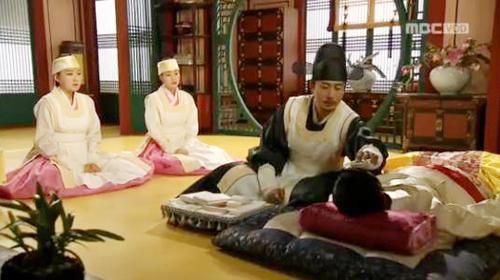
A scene from South Korean drama "The Legendary Doctor Hur Jun." |
In April, the UAE introduced licensing requirements for Korean medicine practitioners as a part of efforts to realign its healthcare system with emphasis on expanding the role of traditional medicine, or the complementary and alternative medicine (CAM).
Unlike most countries, Abu Dhabi specifies CAM by country rather than grouping it under broad labels such as Asian or Eastern medicine. In June, its Department of Health incorporated the name, definition, and scope of Korean medicine into official regulations, making it the third country after China and India.
According to global research firm Grand View Research, the UAE's CAM market was valued at $2.78 billion in 2024 and is projected to grow at a compound annual growth rate (CAGR) of 25.4 percent through 2030.
Traditional practices such as Hijama (cupping), herbal remedies, and Ayurveda have long been part of the Muslim cultural heritage. The government has been eager to incorporate traditional therapies in the modern healthcare system.
"The UAE is trying to expand its traditional medicine industry and the recognition of Korean medicine is part of the effort. The people there are already familiar with cupping therapy similar to Koreans," observed a researcher of the National Institute for Korean Medicine Development (NIKOM).
Rising modern-day stress has also spurred demand for traditional calming therapies.
According to a report in March by U.K.-based BioMed Central (BMC), the UAE records about 24,000 mental health cases annually, with depression and anxiety the most common.
Growing "medication fatigue" among patients dependent on long-term pharmaceuticals has driven many toward holistic approaches. Yoga, herbal nutrition, meditation, and mindfulness are popular among millennials and Gen Z, who are more receptive to non-invasive, wellness-oriented solutions.
Moreover, the people of the UAE have long been accustomed to Korean traditional medicine and culture through immensely popular epic dramas such as "Jewel in the Palace."
The UAE's recognition validates the credibility in Korean medicine, said Jeong Young-hoon, director of Korean Medicine Policy at the Ministry of Health and Welfare.
"This institutionalization marks a critical turning point for the Korean medicine industry and professionals seeking to expand into the Middle East. We will continue to actively support the global spread of traditional medicine through cooperation with the UAE and beyond," he noted.
Kim Hee-su Reporter khs@ajupress.com
- Copyright ⓒ [아주경제 ajunews.com] 무단전재 배포금지 -
 이 기사의 카테고리는 언론사의 분류를 따릅니다.


!["여보, 나 숨 좀 쉬자"... 점심값 1만 2천 원 시대, 3040 '용돈의 비극' [얼마면 돼?]](/_next/image?url=https%3A%2F%2Fthumb.zumst.com%2F256x144%2Fhttps%3A%2F%2Fstatic.news.zumst.com%2Fimages%2F14%2F2026%2F01%2F11%2F57f9b1c00d8b4f30bb5ccede1053fe46.png&w=384&q=100)